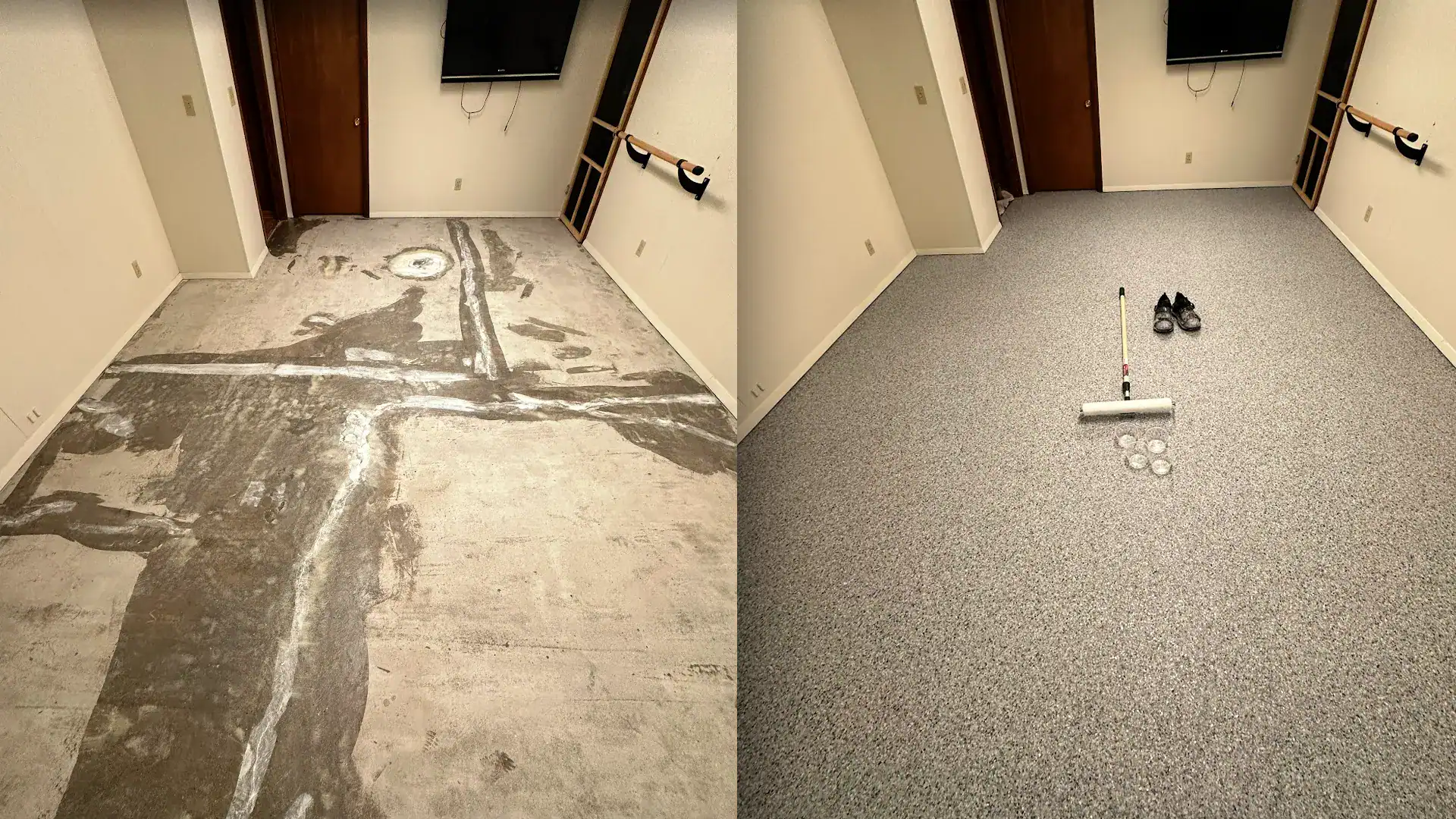
If you’re considering an epoxy floor coating for your garage, the condition of your concrete matters more than most homeowners realize. Not all concrete damage looks the same, but every type affects how well a coating bonds and how long it lasts. When damage is overlooked or improperly repaired, even the best coating system can fail prematurely. Here are the most common types of garage concrete damage that should be addressed before installing an epoxy floor coating.
Cracks and Movement-Related Concrete Damage
Every professional installer understands there are two types of concrete: concrete that’s cracked, and concrete that’s going to crack. Whether a slab is newly poured or decades old, expansion and contraction are inevitable.
Because concrete moves, cracks should never be repaired with rigid materials. Before an epoxy floor coating is installed, cracks must be repaired using a flexible elastomeric filler. This allows the repair to move with the slab, helping mitigate inevitable shifting that could otherwise transfer stress into the coating and cause visible crack lines over time.
Surface Deterioration That Prevents Proper Bonding
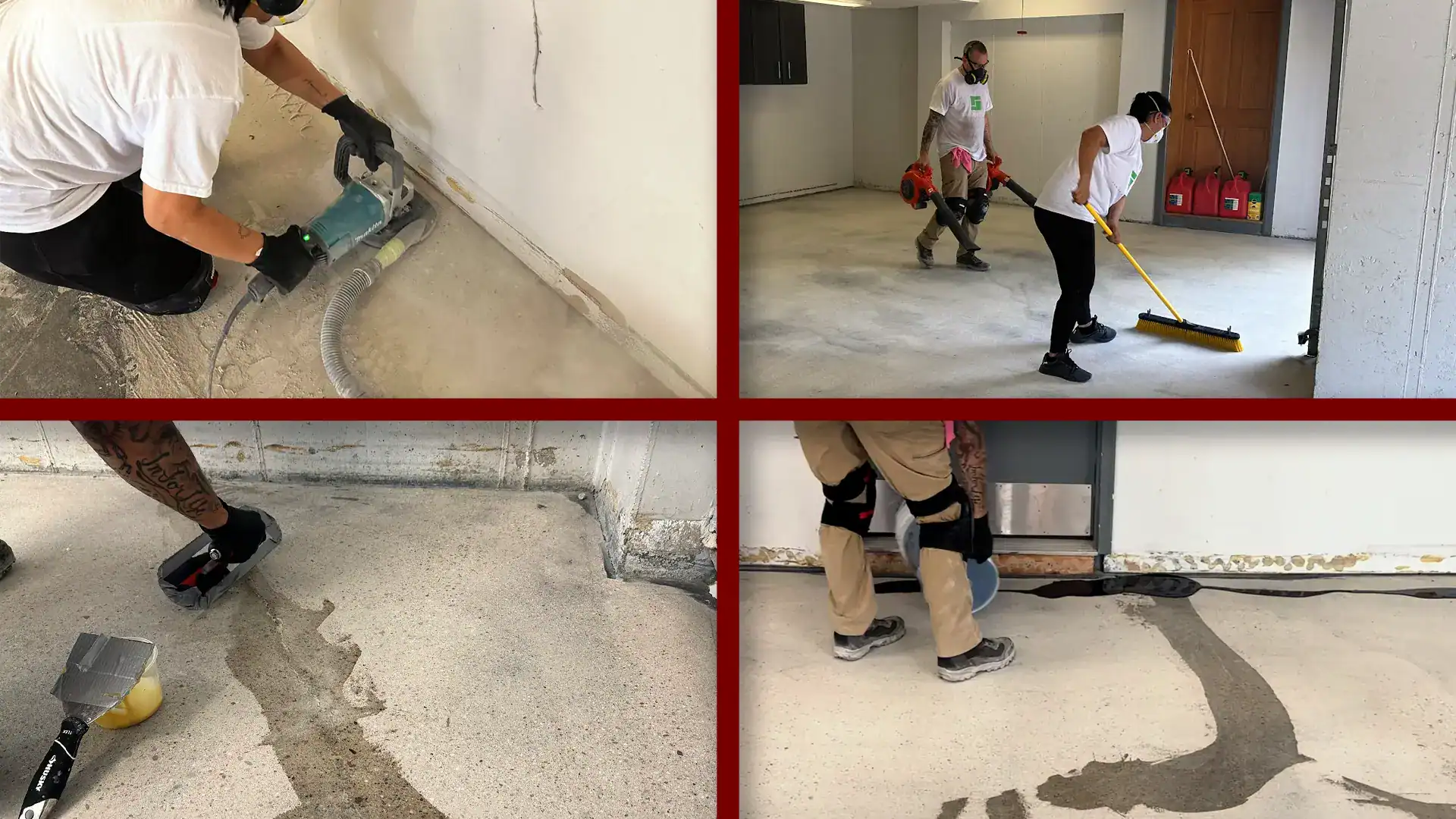
Garage floors often show signs of surface wear such as pitting, flaking, or minor spalling. While these issues may appear cosmetic, they interfere with the ability of a garage floor coating to bond properly.
Professional installers correct this damage through diamond grinding. Grinding removes weakened concrete, creates the proper surface profile, and exposes sound material beneath. Without this step, coatings are more likely to peel or delaminate regardless of product quality.
Moisture-Related Concrete Issues
All concrete holds moisture. Before applying epoxy floor coatings, installers should test moisture levels. If moisture readings are elevated…and they usually are…a moisture-mitigating epoxy primer is necessary. Unlike a polyurea or polyaspartic primer coat (a standard approach in “1-day” systems), the thick epoxy primer acts as a moisture vapor barrier. It protects the entire coating system from future moisture-related issues that lead to delamination.
The use of the slower-curing, moisture-mitigating epoxy primer is one reason higher-quality systems often require a 2-day installation instead of a rushed 1-day approach. Moisture mitigation protects the bond below the surface, where coating failures typically begin.
See What an Epoxy Floor Coating Could Look Like in Your Garage
If you’re considering an epoxy floor coating for your Long Island garage, proper concrete repair and preparation should always come first. Timeless Concrete Coatings specializes in professional surface prep, flexible crack repair, and moisture-mitigating systems designed for long-term performance.
You can also explore the Live Coatings Visualizer to preview how different epoxy floor coating options would look in your actual garage before making a decision. Contact Timeless Concrete Coatings today to schedule a consultation and take the next step toward a garage floor built to last.