Homeowners often ask, “What’s the difference between epoxy and polyurea-polyaspartic flooring?” because they want to understand which option will last longer. The truth is that these concrete coating materials are not competing products. They serve very different purposes within a professional “layered” garage floor coating system. Knowing those differences helps you evaluate installers and avoid shortcuts that lead to premature failure.
Ask How Moisture Is Managed Before Polyaspartic Flooring
Concrete on Long Island often holds moisture below the surface (all concrete does), even when it appears dry. Before any coating is installed, the installer should explain how moisture in the concrete is tested and controlled. Why? Because without proper moisture mitigation, coating systems applied to concrete are far more likely to blister or lose adhesion over time. All coating systems need to mitigate for moisture (they require a moisture vapor barrier as the base coat).
Ask What Product Is Used Beneath the Surface
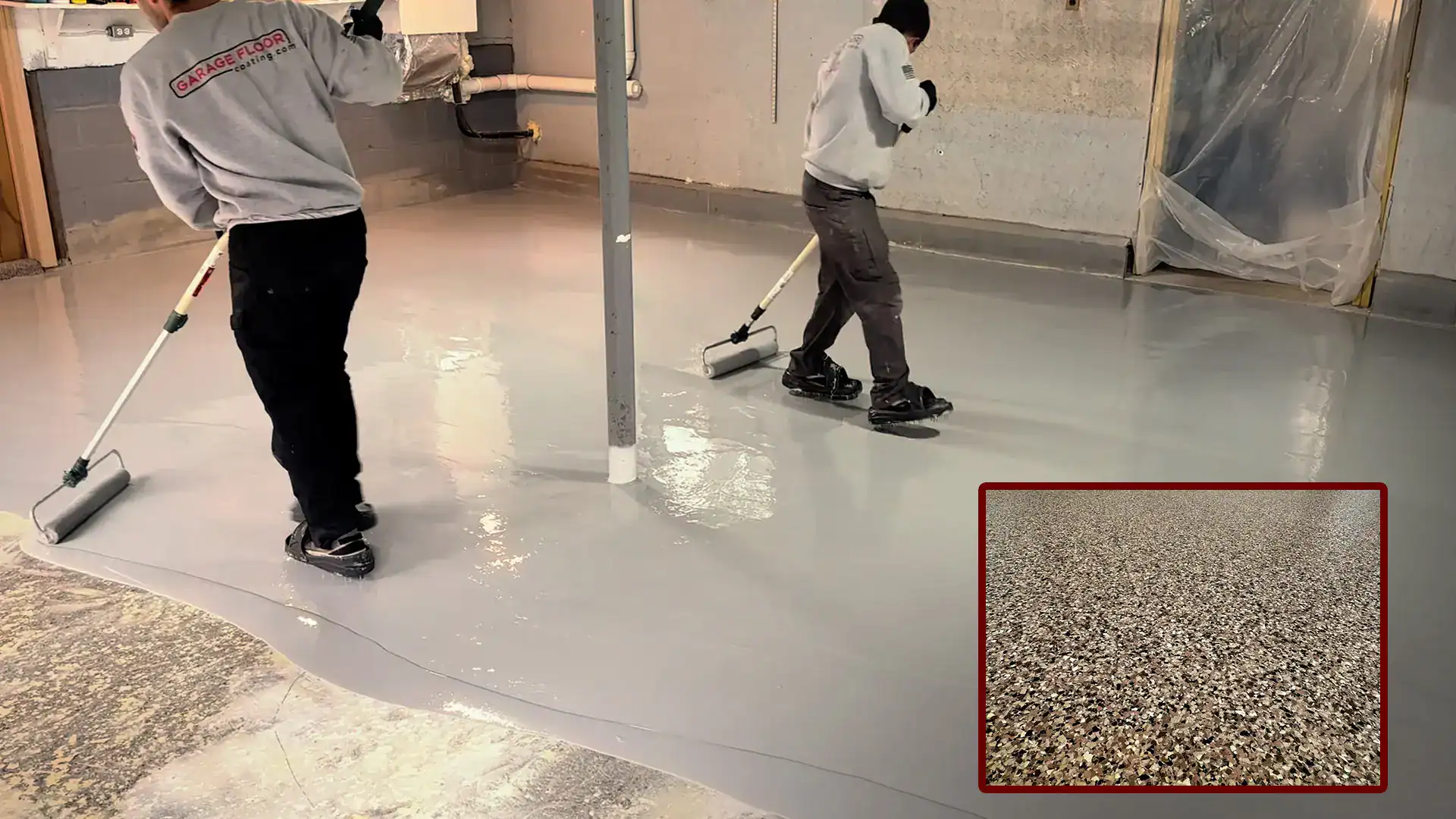
One of the biggest differences between epoxy and polyurea-polyaspartic materials is where they belong in the system. A slow-curing, moisture-mitigating epoxy coating is commonly used as the direct-to-concrete primer because it can be applied thickly (it’s a high-build coating) and it slowly and deeply penetrates the concrete slab. This first layer acts as a moisture vapor barrier and creates the thick structural foundation that supports the rest of the floor coating system.
While a polyaspartic flooring excels as a top coat, it is simply not recommended for direct-to-concrete application (ask ChatGPT). These coatings go down thinly and cure so quickly that they fail to deeply penetrate the concrete. They are superb color and top coats, but lousy direct-to-concrete coats.
Ask How UV Protection Is Built Into the System
Although a moisture-mitigating epoxy flooring is an extremely durable, moisture-mitigating primer coat, it has it’s own deficiencies. Epoxies offer lower UV resistance than polyaspartics, which is why they are typically not applied as top coat (unless applied as an interior top coat). Conversely, polyurea-polyaspartic coatings provide extreme UV stability, preventing fading or discoloration over time, along with stain, chemical and impact resistance. So, they are excellent clear topcoats. A proper garage floor coating system uses the best properties of both coating types: epoxy base coat and one or more polyaspartic clear top coats.
Ask Whether the Coating Is Installed Over 1-day or 2-days
Polyurea-polyaspartic 1-day coating systems can be a recipe for disaster. Why? Because they use a quick-cure polyurea or polyaspartic as BOTH the direct-to-concrete primer and the clear top coat. Less experienced contractors favor them because they allow the installation to be completed in a single day.
2-day systems use a slower-curing, moisture-mitigating epoxy (as the moisture vapor barrier), allowing adequate curing time, before applying the polyurea-polyaspartic topcoats. A professional installer should be able to explain their process clearly instead of forcing every project into sped-up schedule.
Visualize Your Floor Before You Commit
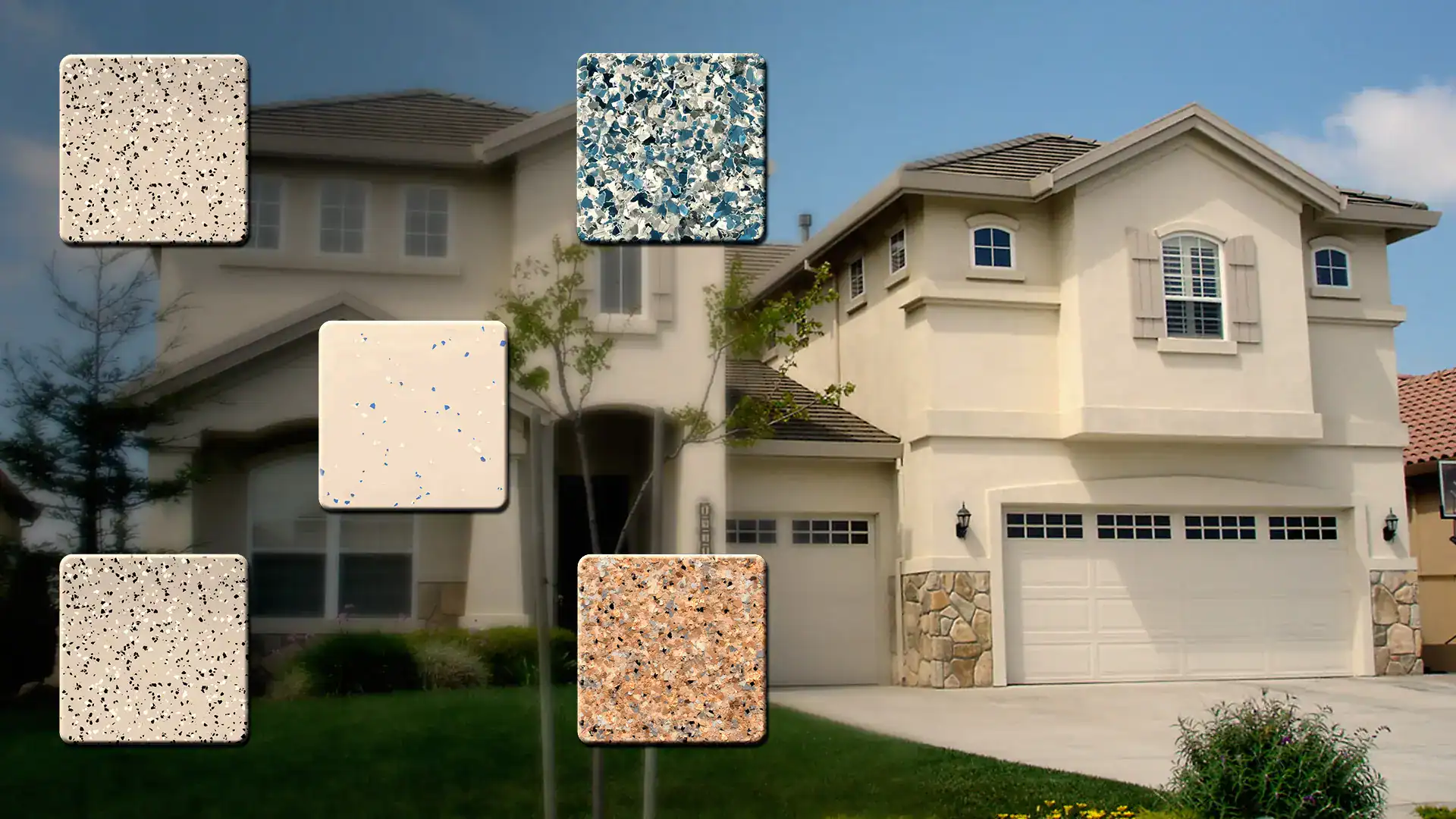
Timeless Concrete Coatings offers a Live Coatings Visualizer, allowing you to preview colors and flake blends in your actual garage or home.
If you are considering polyaspartic flooring, contact Timeless Concrete Coatings to schedule a consultation and design a garage floor coating system built for long-term performance and real-world conditions.